
Check out the video version of this essay!
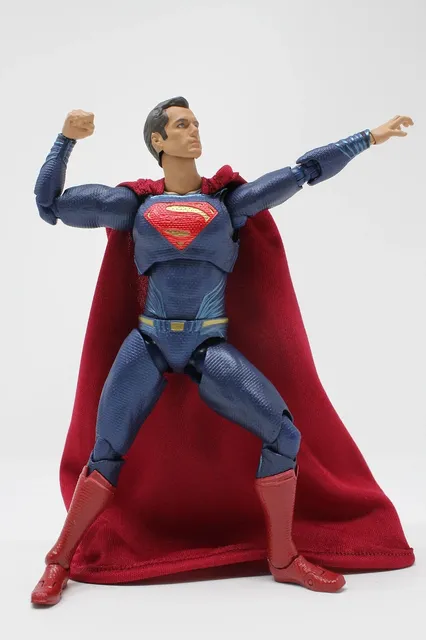
When you think about it, in some ways, Superman isn’t a very compelling character on his own. He’s Superman. He’s impervious to bullets. He can fly away from any threat. He can make heat rays come out of his eyes, for god’s sake. No, Superman doesn’t quite become a compelling character until the introduction of a certain crystalline material known as kryptonite. Once Superman can be rendered un-super, the stories have even bigger stakes and the resolution of the stories can be in doubt.
Fun tangent based upon my very basic research. (Thank you, Wikipedia.) Superman co-creator Jerry Siegel wrote a story during Superman’s first couple years of publication—he premiered in 1938—that featured a kind of kryptonite. According to Gerard Jones, author of Men Of Tomorrow: Geeks, Gangsters, and the Birth of the Comic Book, the story was rejected because the conceit would have exposed Superman’s Clark Kent identity to Lois Lane. Kryptonite finally made its way to the comic books when editor Dorothy Woolfolk felt “Superman’s invulnerability was boring.”
And that’s what I want to talk about. Regina George is not a full, complete, compelling character in the first act of Mean Girls because she’s invulnerable. Same goes for Steven Seagal characters. With one notable exception, he always wins every fight, no matter how hard it is for him to move around. In Jenny B. Jones’ In Between, she introduces Katie Parker: a character whose mother is in jail, leaving her to the custody of the state. After six months, she’s put into foster care with Mr. and Mrs. Scott. As Jenny puts it, “a squeaky-clean family who could have their own sitcom.” I found Katie and her story compelling, but why?
The protagonist of Jenny B. Jones’ In Between is a young woman named Katie Parker, who is introduced in a felicitous manner. She’s in the passenger seat on her way to her new foster home. The author slips in the exposition in a wonderfully graceful manner. If you check out her web site…which you should…you’ll learn that this is only the first book in a series of novels about young Ms. Parker. If all of that ink, digital and otherwise, is going to be spilled over a character, then she better be good.
And from the way she’s established in In Between, Katie is pretty great. But why? Katie is most certainly a strong, independent young woman who can take care of herself as much as anyone else her age. Sure. But like I said with Superman, a character isn’t interesting if that’s all he or she is. I’m thinking of Veronica Mars. In the pilot episode of that great show, we immediately learn that Veronica is NOT someone with whom you should mess. She’s tough. She’s snarky. She’s smart. But she also misses her mother and her best friend and is dealing with a lot of pain.
Let’s take a look at a crucial passage. After a quick tour of her new foster home, the caretaker, Mrs. Smartly, prepares to leave Katie with her new foster parents.


Up to this point, Katie has been full of snark. She’s never cruel or unpleasant. She’s just acting…like a sixteen-year-old. Talking back mildly to Mrs. Smartly and hiding behind the façade of strength she has understandably been erecting for years. Again—100% confidence and strength and victory is BORING.
Mrs. Smartly knows the score. She knows that Katie is revealing some vulnerability. No one wants to see the laundry room again. But as the adult here—this is Jenny giving Mrs. Smartly some characterization of her own—Mrs. Smartly knows that Katie is just scared and deals with it in a helpful way.
After snark and self-confidence, we have perfectly understandable “don’t leave me!” from Katie. Slightly irrational fears of being drowned in dog drool. And look at that part:
Oh yeah, Millie Scott, you’d better be scared. You’d better fear this. I am dangerous. I do dangerous, risky, life-threatening things all the time.
Oh, who am I kidding? The most dangerous thing I’ve ever done is sit on a public toilet.
In these two paragraphs, Jenny encapsulates Katie’s mindset: she acts tough…but acknowledges her vulnerability to herself and to the reader whom she directly addresses.


I don’t know if you agree, but crying can sometimes be cliché. It’s a very obvious and clear way of expressing a character’s emotion, but it’s too easy. That’s why I like the way Jenny handles that next moment. Mrs. Smartly can tell Katie is getting emotional and brings her to a place where they can have a little more privacy. Instead of giving us the description of Katie weeping, we get her internal monologue and infer the emotion instead.

Okay, so we do have explicit description of crying here, but Jenny avoids the cliché by making the action secondary. Not only that, the tears are accompanied by some of the humor Katie uses as a defense mechanism.
I love that Mrs. Smartly gives Katie stationery. This is the kind of gift that has a different meaning for adults than it would for a sixteen-year-old. To a youngster, writing letters is a formality. Something you do because you’re told. But Mrs. Smartly knows she’s not just giving Katie homework…she’s forcing Katie to think and write about her feelings.
Okay, I’m going to skip a little bit ahead.
Again, having a character cry isn’t bad in and of itself. What I like about this bit is that the crying has definitely been earned. This scene is not too terribly long, but it is definitely long enough for Jenny to offer an appropriately fulsome description of Katie’s mindset.
You’ll also notice that Mrs. Smartly puts Katie in her place with the chest poking. Again, Katie and the reader are reminded that while Katie is certainly strong and independent…she’s still a kid. She thinks she can take care of herself, but she can’t. No one can at that age.
Had Julie made Katie invincible, she would not be as compelling. Again, think of Veronica Mars. She could handle virtually any situation that faced her. But every so often, things happened that reminded you—and her—that she’s not as tough as she thinks she is.
Let’s see how the chapter ends:

I love it. The third chapter ends with what is probably the turning point of the first act. Katie is in her new home and her new life is beginning. And she’s beginning that new life at an emotional low point.
I actually want to continue reading the book. Why? There are a few reasons, but mainly because Katie is a compelling character by virtue of the fact that she sometimes…maybe usually…doesn’t get what she wants. She’s smart and capable…but she can’t solve all of her problems. She sometimes has trouble coping with those problems.
Katie Parker is a well-rounded and interesting character, and it’s because Jenny allowed her to be vulnerable, just like a real human being.
What do you think? How do you depict the vulnerability in your protagonist? (And side characters?) Does it sometimes hurt your feelings when you put your protagonist through unfair stress? What’s the difference between a strong character and a jerk?